The Department Store You Never Knew Existed
You walk into a store you cannot see, and spend money you do not own. The walls are invisible. The fees for use are high. The exits are sealed by convenience.
But now, if you look, there are new exits.
Technology has brought us new doors and new stores.
Elaine~
June 13, 2026 by elainedianetaylor~
1. The Card in Your Pocket
You enter a department store. You have a card printed with your name and a balance: $100. You use it inside the store.
You give the store money and it gives you their card. It’s convenient. The store has everything you need.
If you want to leave the department store and shop elsewhere you can give them their card and they will give you cash, like a casino, where you use their private chips inside their building and cash out when you leave.
The store card was never money. It was a claim on money. Private money. Valid only inside that store.
Here is what most people do not know:
Your bank account functions the same way.
The numbers you see—$3,472.56, $12,891.00—are not government money. They are claims, “promise to pay” issued by a private company. Denominated in national symbols. Valid only inside that private company’s ledger.
The department store is so large you cannot see the walls.
It has everything you need. Everyone uses it.
Banks are privately owned and the money you use every day is actually private dollars inside their private ledger.
2. The Two-Tier System
Private commercial banks create money when they lend. They do not lend out the currency people deposit. They create new claims on their own books every time someone borrows. The borrower spends those claims into the economy. The recipient deposits them in another bank.
Now that bank holds private money issued by the first bank.
The whole system circulates private claims, private “promises to pay”.
Sovereign currency enters only at the edges. Large nation to nation payments. Mostly, today, done with US dollar currency.
When you pay taxes, you use the bank to exchange private claims for central bank money.
The Bank for International Settlements does not create money at all. It provides services. Coordination. Standards. Data.
The BIS is the bank for central banks.
The BIS is owned by central banks.
3. Denomination as Disguise
A casino chip says $100. A department store card says $50. A bank statement says $3,000.
None of these are dollars. They are claims on dollars. Private promises. The symbols create the illusion of sovereignty. The reality is private issuance.
McLuhan understood: the medium shapes perception. You believe you hold money. You hold a claim on money.
You walk inside a ledger.
Not a bad thing if you are happy with the terms and the offer.
Many are.
Up until recently there were no other offers.
Now there are other private stores with other offers.
Other private money with lower fees and faster settlement 24/7 all around the world.
4. The Physics of Belonging: P-Waves and S-Waves
A P-wave moves through material as pressure. Compression in the direction of travel. The particles move together. Forward and back. Synchronized. The whole stick moves at once.
This is the crowd. The collective. The department store’s ideal customer: marching toward the checkout, spending private money inside the private store, synchronized, predictable, moving together.
This is what social centralized persuasion wants. You are happy, they tell you.
An S-wave moves perpendicular to the direction of travel. Shear. Each particle moves independently. Up and down. Across the grain. Transverse motion. Separate from the collective direction.
This is the individual asserting agency.
The S-wave does not march in step. It exerts its own energy to choose direction.
This is you as a person when you are not inside a crowd.
Canetti wrote in *Crowds and Power*: “The individual who joins a crowd is not a different person from the one who stands outside it, but the conditions of his existence are different… He can leave the crowd; he can also join it. This is the essence of his freedom.”
To leave the department store requires the energy of an S-wave. You must exert your own force against the collective direction.
You must find the exit if you want to, because the current structure serves their best interest. They won’t tell you all your options when they are a private company looking for profit.
The crowd is fed media to keep the crowd happy, because the owners of the media are the ones who own the department store, its goods, its delivery systems, its payment structure, its credit cards.
All good if you are happy with the system.
Maybe you are not so pleased. Maybe you’d like to look at options coming to light.
5. The Garden and the Pie
Every institution is a garden that begins with creators. They plant seeds. They build ecosystems. The garden grows because the creators tend it themselves. Rules serve the organism. Flexibility abounds.
Then the creators die. Administrators inherit the garden.
Administrators do not create. They preserve. They cement living rules into rigid structures. The organism becomes a machine. The garden becomes a pie. Everyone fights over slices.
When a human is in a position of power there is the desire to take an extra slice if no one is watching and there is no punishment. For those with a wolf personality, they will take an extra slice by bullying or deception, whatever works as their desire is not the welfare of all.
Carroll Quigley wrote in *The Evolution of Civilizations*: “For in an organism the parts exist for the sake of the whole and are subordinate to it; they must be sacrificed if necessary for the welfare of the whole.”
The administrators believe this sacrifice is natural. The institution believes it too.
Ancient Greece, in the Classical Civilization period had 20 – 40% of the population as slaves. They did not question the morality. Only a sliver of the population were literate and had time to read Homer because of their domestic slaves.
The beauty, art and literature was made by the elite for the elite.
Cities produced nothing and agriculture was worked by slaves. The poor and illiterate had mythology to understand their chaotic world, where they were subject to the will of gods they did not understand.
Aristotle wrote that slavery was natural and that some humans were born to serve.
6. Corruption and the NDA
When humans exploit the system—fraud, theft, abuse—administrators face a choice. Root out the rot? Or hide it?
To expose corruption admits the system is flawed. To prosecute a senior manager admits the institution failed.
Favours are owed. High officials are blackmailed. Victims are bullied and punished into silence. The system itself must be protected.
So they settle. Non-disclosure agreements. Payoffs. The victims are silenced. The leaders are protected. The system survives.
The individual parts are sacrificed to protect the whole.
That’s when the pendulum is at one end and is about to swing back with pent up force.
7. The War on Yield
New private companies have built new stores. They do what old banks do—faster, cheaper.
Fractions of a penny. Seconds instead of days.
Fintech. Payment rails. Digital wallets. New stores with better prices.
The old stores are not surrendering. The banking lobby presses government to intervene. To prevent new payment companies from offering yield on held balances.
If money has utility—customer provides service—perhaps a reward. But holding? No yield for you.
The banks want to keep the whole pie because perhaps they can. They do not want a new garden.
If there must be a new garden, and they can see the dying of the old, then they want to control and build the new one.
That is where we are.
8. The Available Alternative: Decentralized Private Money
As the system exists today, digital private companies offer an alternative to the commercial banking private money system.
You are not leaving private money for government money.
You are leaving one private money system for another—decentralized private money instead of centralized private money.
Legal, fine, developing, more products being offered as the companies and technologies develop.
Global banking and global governments are working for a legal large framework for large institutional funds and money, because they are Pies and not gardens. They want to preserve their system. New companies want to plant and grow.
Right now, both exist.
Either way, your private money is exchanged into government money via the commercial banking system when you pay taxes.
This does not change. What changes is your day-to-day operating system.
The new decentralized private money systems offer:
Lower fees. Competition forces prices down. The old department store charged dollars for services that take days. The new stores charge fractions of a penny for services that take seconds.
Faster settlement. Technology enables near-instant transaction finality. No waiting for ACH, no wire delays, no clearing house bottlenecks.
More options. The pendulum swings from centralized to decentralized. This swing opens alternatives. The individual can choose which private money system to use.
The exit from the commercial banking department store, or trying out another does not require waiting for a future system.
The question is whether the individual wants to investigate these options or stay inside the only store they have ever known.
9. Technology Opens the Exits
For the first time in history, individuals have technological alternatives to the department store.
Big Tech. Google and Apple with their own walled gardens, among others.
Bitcoin. No central issuer. No programmable restrictions. Decentralized ledger. The store belongs to no one—therefore to everyone who uses it.
Stablecoins. Private companies will all issue tokens pegged to fiat currencies. Circulate on blockchain rails. Smaller fees. Faster settlement. You hold the keys. You control the exit.
Tokenized assets. New protocols tokenize real-world assets—gold, real estate, equity. Create stores of value outside both commercial bank money and central bank money.
x402 and other protocols. New ways to pay with private money using AI agents.
Cash. Government money but not programmable.
Physical gold. Sovereign money for millennia. Belongs to no ledger. Requires no bank. Is Tier 1 money on central bank balance sheets.
Private money alternatives compete with commercial banks.
So, of course, big commercial banks don’t want that.
Governments don’t want data held by private companies in private silos and walled gardens.
10. Basel III and Gold
Under the Bank for International Settlements’ Basel III framework, gold was reclassified from a Tier 3 asset to a Tier 1 asset. The same category as sovereign bonds and cash.
Central banks may now hold gold at full book value on their balance sheets.
Why did the BIS do this? Because central banks were buying gold anyway. The BIS formalized what the system had already chosen: gold is the exit strategy from the dollar-based P-wave.
Gold is the S-wave asset that survives transition.
11. The Bigger Store: CBDCs
The Bank for International Settlements coordinates research. Central banks are desperately exploring issuing retail currency directly to citizens.
Commercial banks do not want this competition. Central banks are offering commercial banks the option to make a profit by offering things to the retail CBDC holders.
They aren’t playing ball. They want it all.
Since money is becoming decentralized and data itself is becoming decentralized what does the BIS offer?
They must get data. They must convince governments to get data so they stay needed.
They must frame the world as a threat and that they must have all data to keep everyone safe in the digital world.
12. Central Bank Digital Currency – CBDCs
Issued directly to each human’s digital wallet. Bypassing commercial banks entirely.
Sounds like sovereignty. Sounds like leaving the store.
It is not.
Instead of being inside a commercial private money system ruled by profit and backroom deals, this is a system ruled by raw, government power.
A retail CBDC is programmable. The central bank—operating at the bequest of government—could decide how long you may hold currency before you must spend it. Where you may spend it. What you may purchase. Whether your account may be frozen.
The new department store does not just charge fees. It could control behavior. It would know every transaction. It would see everywhere you go.
A corrupt government regime would be able to see who thinks or acts against them, and freeze their money.
No more capital flight to another country if there is a war coming, or economic collapse. You are a crowd by force. No individual decisions unless they let you.
The store tracks your every move. The exit disappears.
13. The Permanent Underclass
A population with programmable currency cannot escape an abusive government. Cannot accumulate wealth sufficient to exit. Cannot organize financially. Cannot gather resources to build alternatives.
Canetti wrote “The power of the ruler lies in his ability to command and to be obeyed… The more the commanded obey, the more the commander can command.”
Programmable currency guarantees obedience.
The S-wave cannot form. Only P-waves remain.
14. The Inversion
For the first time, technology exists to leave the economic organism. No longer trapped by necessity—paycheck, mortgage, car, groceries. The individual can exit without losing access to basic services.
The sacrifice is no longer necessary. The parts can refuse to be sacrificed for the whole.
Quigley’s organism metaphor inverts then: when the parts have agency to leave, the whole must serve the parts or lose them.
This is the race that all those with power are struggling with right now. This is the real fight behind the scenes.
15. The Choice
Every human faces a choice.
Remain in the department store. Spend private money. Pay fees. Accept programmable restrictions. March as a P-wave.
This is working for the elite right now. They don’t want a change. Who would want a new garden when they own all the pies and divvy up the slices to keep the masses productive and hungry.
Or take a look at what’s developing and maybe exit the store. Open a different account. Hold a different asset.
Or have both. Buy different money. Move as an S-wave.
The freedom means deciding whether to join a crowd or remain outside it.
Choice requires energy. The S-wave is harder. But the S-wave is sovereign.
16. The Open Door
A customer stands at the exit of a department store. Shopping there for decades. Did not know the money was private. Did not know the prices were coordinated. Did not know the exits were hidden.
Now they see. The door is open. Technology has unsealed the exits.
Let’s see what’s out there.
New companies could profit share in ways not feasible before.
New tech let’s tiny amounts move in seconds for under a penny.
I think we can build something beautiful without extraction.
Something golden.
Elaine~
About the Author
I am a communication theorist, singer songwriter, artist, writer, publisher, goldsmith, managing editor and researcher. I cover the history of civilizations, money, gold, power, extraction in its different forms, monetary history, and the alternatives that become available when the pendulum swings.
I am building products and services for my community, tools that assist in understanding and using the new alternatives, and in seeing the swing of civilizations on both grand and small scales.
I make art and music that feels the experience of this shifting civilization. I am driven by natural beauty, rocks, trees, water and their forces.
This is not financial advice. I am not a financial advisor. I am a researcher and a writer sharing what I learn as I explore the exits from the department store.
Stay Connected
If you would like to receive notifications when new articles are published and products become available, please add your name to the mailing list.
You can find more of my work at http://www.elainedianetaylor.com at http://www.x.com/elainedtaylor and email through contact@elainedianetaylor.com
Citations
Canetti, Elias. Crowds and Power (German: Masse und Macht, 1960). English translation by Carol Stewart. New York: Farrar, Straus and Giroux, 1962.
McLuhan, Marshall. Understanding Media: The Extensions of Man. New York: McGraw-Hill, 1964.
Quigley, Carroll. The Evolution of Civilizations: An Introduction to Historical Analysis. New York: Macmillan, 1961.
Quigley, Carroll. Tragedy and Hope: A History of the World in Our Time. New York: Macmillan, 1966.
Bank for International Settlements. “Basel III: A global regulatory framework for more resilient banks and banking systems.” Basel: BIS, December 2010 (revised June 2011).
Bank for International Settlements. “Central bank digital currencies for emerging market economies.” BIS Papers No. 123, August 2023.
McLeay, Michael, Amar Radia, and Ryland Thomas. “Money creation in the modern economy.” *Bank of England Quarterly Bulletin* 54, no. 1 (2014): 14-27.
Elaine Diane Taylor
Keys: monetary systems, commercial bank money, private money, gold, quantum systems, crowds, digital currency and wealth, civilizations rise and fall, physics, earthquakes, p-wave and s-wave, crowds, sovereignty
Songs for today:
“Wag the Dog” unplugged, war, pitchforks, lyrics move in quantum meaning you can join the word before and after to make a different meaning individual or joined, with different meanings either way, the powers beating the drums of war. https://www.youtube.com/watch?v=1KD4B2OqSP0
……………
Mike Maloney’s Hidden Secrets of Money:
- Hidden Secrets of Money – Full Series on YouTube (opens in new tab)
- Direct link to Episode 1 – Currency vs Money (the one that features “Coins and Crowns” unplugged): Over 6.8 million views
- Episode 1 – Currency vs Money (opens in new tab)
Elaine Diane Taylor on X @ ElaineDTaylor
……………………………………….
Thank you to Jim Rickards for including me in his New York Times bestselling book The New Case for Gold.

……………………………………….
Nothing on this site is intended as investment advice. We’re all watching which way the wind is blowing. Harness it.
……………………………………….
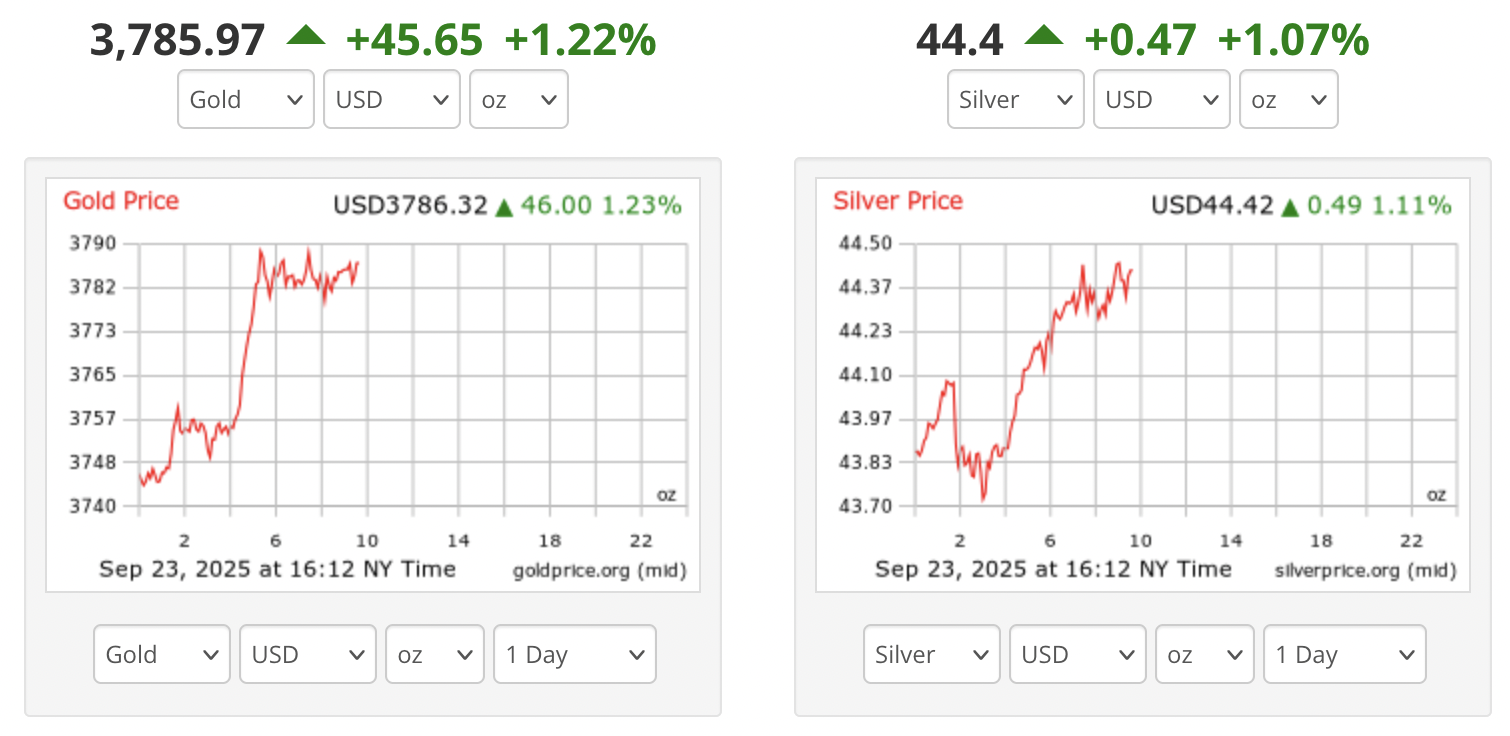
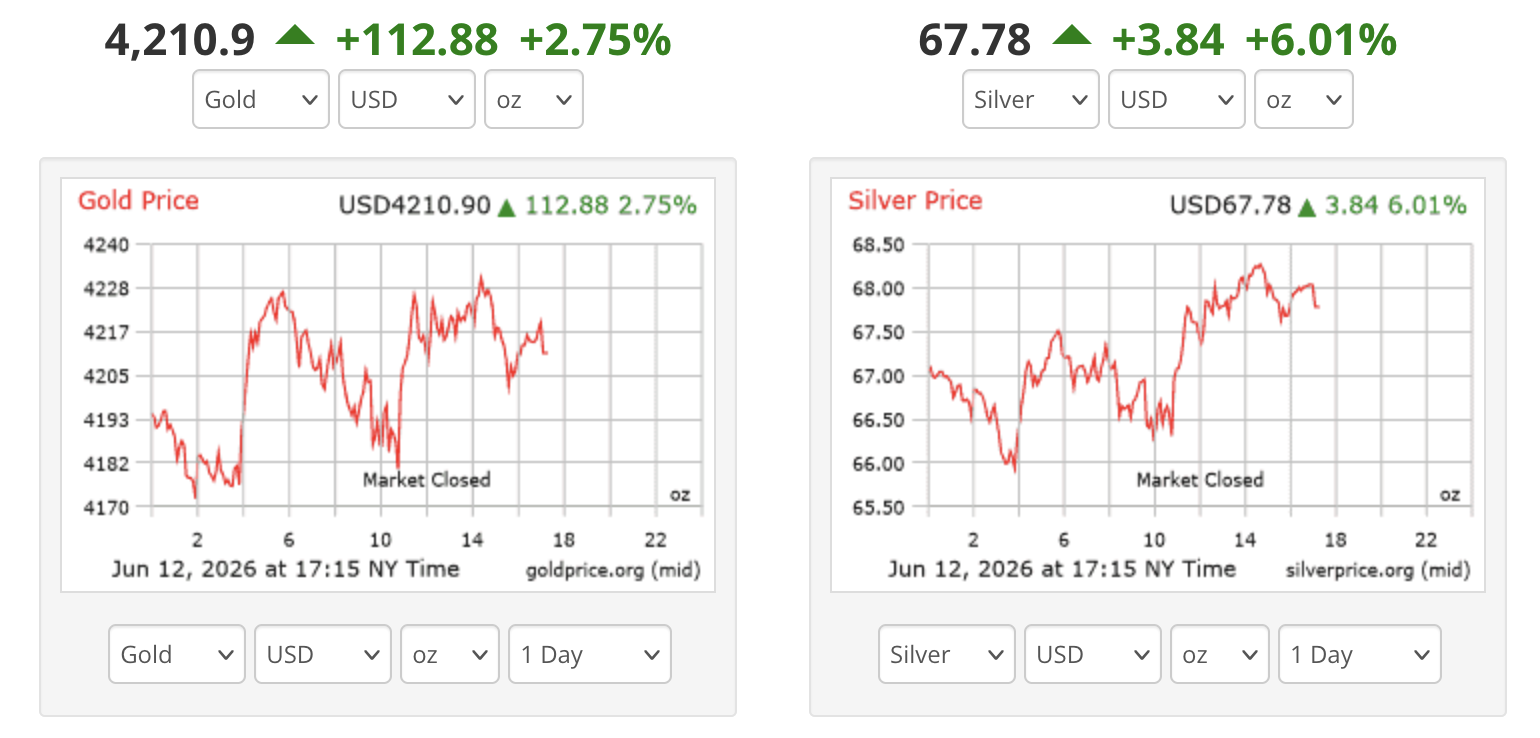
Gold is at historic highs because trust in government and legacy systems is at historic lows.

……..

Elaine – Barkerville, Gold Rush Town, British Columbia, Canada
………….
Thank you to Mike Maloney for including my song Coins and Crowns in Episode 1 of his bestselling YouTube series Hidden Secrets of Money.
Coins and Crowns
words and music Elaine Diane Taylor
SOCAN/ASCAP
from the album Coins and Crowns
Coins and Crowns is featured in Episode 1 of Mike Maloney’s bestselling series Hidden Secrets of Money.
……………………………………….
Not Much of a Holiday (Bank Holidays and Media Persuasion)
words and music Elaine Diane Taylor
Single available on iTunes
……………………………………….
Thank you to the late David Crosby for his kind messages, including the message to me on X (formerly Twitter) saying this song, Terrible Breeze, has excellent lyrics and good music, and his encouragement for me to get out there and sing.
A Terrible Breeze (War and Social Media)
The news comes down
A little ex (X) bluebird sings
Words of war
Fire and furious things
Of testing might
‘Til no patience knows
If keeping still
Still keeps you safe at home
There’s a terrible breeze
They speak of today
Of threats that used to live a world away
We all know wind
Can blow both ways
And a terrible breeze can blow it all away
A worldwide net
Sees our village grow
Until we all forget
What each one used to know
How a blind bird’s wings
Can reach the shore
And turn the wheel of peace and war
Village fools sinking down, down, down
Debt and gold wound in numbered shrouds
Deal of a life it’s bread and clowns
Can we afford another go around?
The news comes down.
It’s a terrible breeze. The news comes down.
words and music Elaine Diane Taylor
Single available on iTunes
……………………………………….
Preparing for the Fall is a live boutique album available for digital download — featuring Wag the Dog, Black Swan Dive, American Pie and Gods of the Copybook Headings. Also available on iTunes, Google Music, Amazon Music and major digital distributors.
……………………………………….
The Gods of the Copybook Headings
words by Rudyard Kipling and music by Elaine Diane Taylor
from the album Preparing for the Fall.
The copybooks of the early 1900s gave us all the wisdom we need. The sayings that were copied are the truths, the gods of our world. All the empires who followed the gods of the marketplace have fallen, and there’s terror and slaughter when the gods of the copybook headings return. The lyrics are by Rudyard Kipling. One of my gurus.
Another Week on Wall Street
words and music Elaine Diane Taylor
from the album Coins and Crowns.
“A little grease (Greece) is floating out to sea, and little pigs (Portugal, Italy, Greece and Spain) are bobbing up and down, they’ll send a storm and we’ll see, when the tide goes out who’s naked on the beach“. The world is changing as we know it.
……………………………………….
Nothing on this site is intended as individual investment advice. We’re all watching which way the wind is blowing.
……………………………………….